Sanctuary at Yates Mill: What Low Inventory Means for Comps and Appraisals
August 13, 2026
August 13, 2026
A buyer touring the southwest edge of Raleigh pulls up the MLS filter for Sanctuary at Yates Mill and finds three homes for sale. The instinct is to read that as heat: tight inventory, act fast, expect competition. That instinct isn't wrong so much as it's answering the wrong question. Three or four active listings isn't a temporary squeeze in this neighborhood. It's close to the normal number, and the reason why changes how a buyer should think about price, timeline, and appraisal risk here.
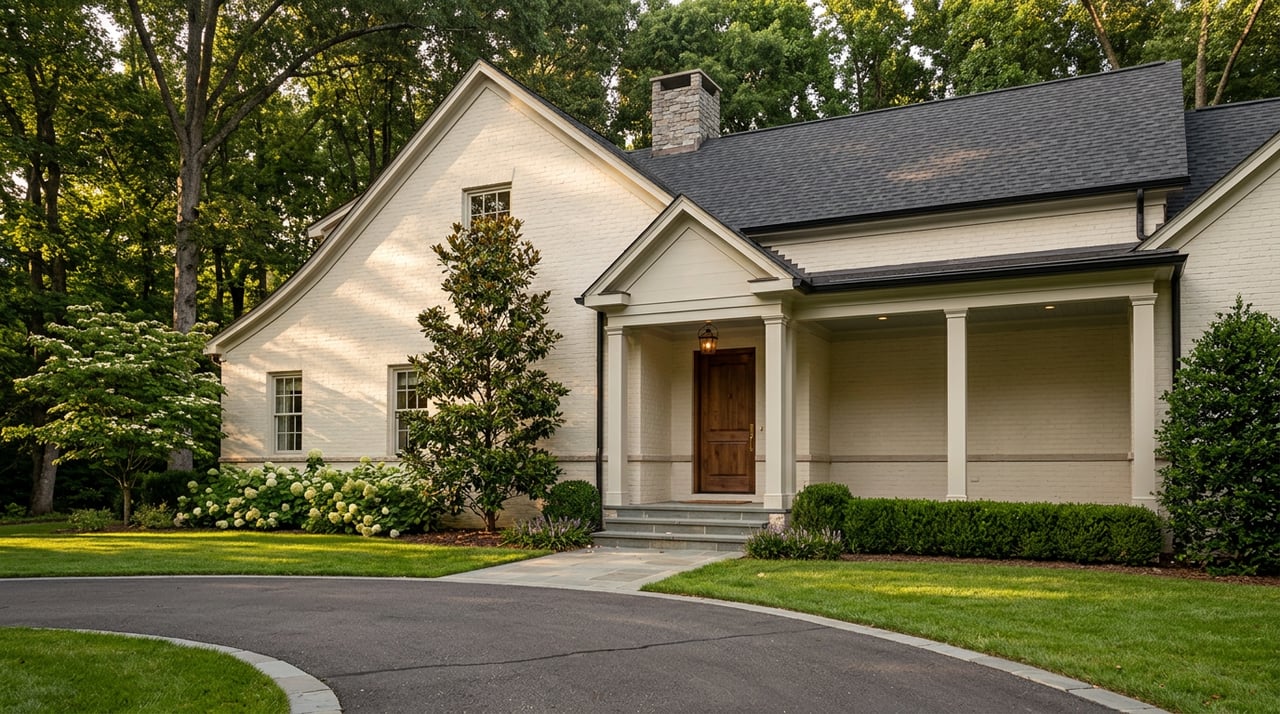
Sanctuary at Yates Mill was never built the way most Triangle subdivisions were, with a single production builder releasing sections of homes on a schedule. It grew lot by lot starting in the early 2000s, with roughly a dozen custom and semi-custom builders working here over the years, including Halcyon Homes, Poythress Homes, Herring Homes, The Jim Allen Group, Amward Homes, CityScape Builders, Exeter Building Company, ICG Homes, and Wardson Construction. Each one built to a homesite rather than a block, on wooded or pond-view lots running about 0.7 to 0.75 acres. That approach created a low ceiling on how many homes could ever exist here, and it has nothing to do with buyer demand. There are simply not many homes in this community, and the owners who chose a custom build on a private, wooded lot tend not to be the kind of household that relists a few years later.
MLS-fed data pulled in late May 2026 showed three active listings in Sanctuary at Yates Mill, averaging $1,574,963 with an average size of 4,743 square feet, against a Wake County average closer to 2,494 square feet. By early June 2026, the same feed showed four listings, averaging $1,649,972 at 5,405 square feet.
| Snapshot | Active listings | Average price | Average size | County average size |
|---|---|---|---|---|
| Late May 2026 | 3 | $1,574,963 | 4,743 sq ft | ~2,494 sq ft |
| Early June 2026 | 4 | $1,649,972 | 5,405 sq ft | ~2,492 sq ft |
The change from three listings to four over roughly two weeks moved the average price up about $75,000 and the average size up more than 660 square feet. That isn't a market trend. That's what a sample size of three or four does to an average. In a subdivision carrying forty active listings, one large home coming on the market barely moves the number. Here, it reshapes the whole picture.
It also explains why comparing Sanctuary at Yates Mill to a county-wide median is close to meaningless. In both snapshots, the typical home here ran close to double the county's typical square footage, and in the June reading, more than double. A buyer using a Wake County median as a mental anchor for what a home "should" cost per square foot is comparing two different products. The county figure is built on a much larger share of entry-level and mid-size homes than this neighborhood was ever designed to include.
The dispersion shows up inside the neighborhood too, not just against the county. As of May 2026, among the small number of homes on the market that month, price per square foot ranged from $274.20 at one address to $399.97 at another, a spread of more than $125 within the same small community in the same month.
That gap is too wide to explain with finish-level differences alone. A more likely explanation, given how the community itself has always been marketed around "select homesites" with pond views and wooded backdrops, is that the premium is attached to the lot, not just the house sitting on it.
In a neighborhood with two or three homes on the market, the highest price per square foot and the lowest can both be accurate. They're describing two different kinds of lots, not two different qualities of construction.
A buyer comparing two active listings side by side should be asking what's underneath the per-square-foot number, whether it's a pond view, a wooded buffer, or an interior lot with less privacy, before deciding which price actually represents the better value.
The same scarcity that makes the per-square-foot comparison tricky for buyers creates a specific, practical problem later in the transaction. Independent MLS-fed snapshots taken from late May through the first week of June 2026 showed three active listings in late May and four in early June. When an appraiser is assigned to a Sanctuary at Yates Mill contract, there often isn't a recent, truly comparable sale sitting inside the neighborhood's own boundary. The appraisal frequently has to pull from adjacent custom-home communities or reach back further in time than the usual six-month window.
For a buyer under contract on a pond-view lot, or a home that runs well above the neighborhood's own average size, that's exactly where an appraisal gap tends to surface. The contract price can reflect what a motivated buyer is genuinely willing to pay for a rare homesite, while the appraisal, built on necessarily imperfect substitutes, lags behind it. This is where a pre-offer conversation about comp availability, and in some cases an appraisal gap clause, matters more in this neighborhood than in one with normal turnover.
Part of what buyers are pricing in here is the setting itself. Yates Mill County Park sits a few miles from the neighborhood and holds a 174-acre wildlife refuge, an environmental research center, and the last operable water-powered gristmill in Wake County, a rare piece of preserved land this close to a fast-growing part of Raleigh. The neighborhood also sits within quick reach of Tryon Road, Highway 54, and I-40, which puts Cary, downtown Raleigh, Research Triangle Park, and RDU within an easy commute, and it's near enough to Cary Tennis Park, Waverly Place, and MacGregor Downs Country Club that daily errands and recreation don't require a long drive.
None of that shows up as a line item on a listing sheet, but it's part of what separates a wooded, pond-adjacent lot here from a similarly sized home in a denser part of the county. Buyers weighing two listings with a wide per-square-foot gap should factor that setting into the comparison alongside the lot premium itself.
Does a low listing count automatically mean I'll be in a bidding war? Not necessarily. A thin market means fewer competing offers on any single home, but it also means fewer data points to price against. Read the listing count as a comp problem first and a competition signal second.
How should I think about price per square foot in a neighborhood like this? Treat it as a starting question, not a verdict. A home priced high per square foot may be sitting on the neighborhood's most private or scenic lot. A home priced low may be a fair reflection of an interior lot with fewer of those features. The number alone won't tell you which is true.
What should I ask my agent to do differently here? Ask how recent, and how local, the comps actually are before you settle on an offer price, and ask whether an appraisal gap clause makes sense given how few closed sales exist to support the number. In a neighborhood this thin, that groundwork matters more than it would somewhere with steady turnover.
Pricing a home correctly in a market with three or four comparable sales a year takes a different kind of analysis than pricing one in a neighborhood with steady turnover. That's the strategic, data-led conversation Kimberlee Edwards has with buyers and sellers across Cary, Apex, Holly Springs, and Raleigh every week. If Sanctuary at Yates Mill, or a neighborhood like it, is on your list, let's connect and walk through what the comps actually support before you write an offer or set a price.
This article is general information, not legal, tax or financial advice. Consult a qualified professional about your situation.
Stay up to date on the latest real estate trends.
Partner with a trusted advisor focused on strategy, discretion, and results. Gain a competitive edge with expert guidance and tailored solutions.