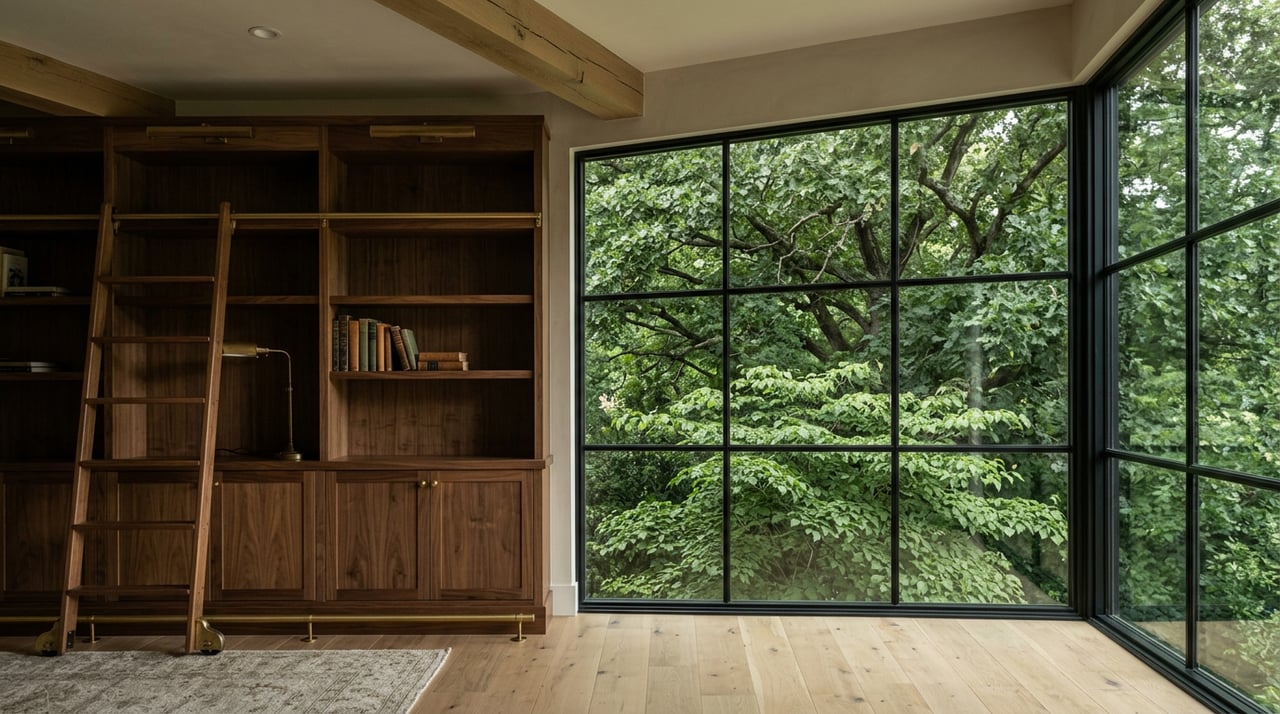
The County Line Through Montvale Doesn't Lower Your Tax Bill. It Raises It.
September 17, 2026
September 17, 2026
Ask about taxes on a Montvale lot tour and you'll likely hear a version of the same reassurance: the Chatham County side is the value play, since Chatham's rate runs lower than Wake's. It's a tidy story, and it gets repeated often enough in West Cary that buyers walk into offers assuming the Chatham-side homesites carry the lighter tax load.
Run the actual numbers for the current fiscal year and the story flips. The Chatham side of Montvale carries a heavier combined tax burden than the Wake side, not a lighter one. If you're comparing a Wake County lot to a Chatham County lot inside the same 109-homesite community, the county line matters, but not in the direction most people assume.
Montvale at Copperleaf sits on a boundary that doesn't show up in the marketing photos: 44 of its half-acre homesites fall in Wake County, and 65 fall in Chatham County, all inside the same Town of Cary address, the same HOA, and the same builder roster of names like Upright Builders, ICG Homes, Poythress Homes, and Hurst Home Company. One community, one entrance off Green Level West Road, two different counties collecting your tax bill.
Because Chatham's base county rate has historically sat below Wake's, the assumption that Chatham-side lots are the cheaper long-term hold has taken root. It's an easy assumption to make if you're only comparing the two county rates in isolation. It's the wrong comparison to make if you actually live inside Cary town limits, because Cary layers its own municipal rate on top of whichever county collects your bill, and that town rate is identical no matter which side of the line your lot sits on.
Here's where the "lower taxes in Chatham" story runs into trouble. For the current fiscal year, Wake County's rate sits at 53.71 cents per $100 of assessed value, a two-cent increase the Wake County Board of Commissioners approved in June 2026 to close a revenue gap tied to a jump in property tax appeals. Chatham County held its rate at 60 cents per $100, the same rate it has carried since the 2025-2026 fiscal year. On the county line alone, Chatham is already the higher rate, not the lower one.
Then add Cary's municipal rate, which applies uniformly across all three counties the town touches. Cary's council approved a 2.75-cent increase in its 2026 budget vote, raising the town rate from 34.0 cents to roughly 36.75 cents per $100. That municipal rate stacks on top of whichever county bills you.
| County Rate | Cary Municipal Rate | Combined Rate (per $100) | |
|---|---|---|---|
| Montvale, Wake County side | 53.71¢ | 36.75¢ | ~90.46¢ |
| Montvale, Chatham County side | 60.00¢ | 36.75¢ | ~96.75¢ |
The gap comes out to roughly 6.3 cents per $100 of assessed value, and because the Cary rate is identical on both sides, that entire gap traces back to the county line itself. On a $900,000 home, a price point that sits comfortably inside Montvale's range, that's a difference of about $566 a year in combined county and town taxes. It's not a number that changes a buying decision by itself, but it's the opposite of what most people walking the model homes have been told to expect.
Here's why the stacking works this way. Cary's own tax office is explicit about it: the town's boundaries now stretch across Wake, Chatham, and Durham counties, and each county independently handles the assessment, billing, and collection for whatever slice of Cary sits within its borders. Cary doesn't get to pick one rate and apply it everywhere. It sets a single municipal rate, and each county tacks that rate onto its own base.
That structure means the municipal layer is a constant. It can't be the reason one side of Montvale costs more than the other. Whatever separates the two sides has to come from the counties themselves, and right now, that separation runs in Chatham's disfavor, not Wake's.
The county boundary through Montvale doesn't stop at taxes. It also determines which public school system your child is zoned into, and the two systems on either side of that line are structured differently.
Homesites on the Wake County side fall under the Wake County Public School System, the largest school district in the state, serving well over 160,000 students across 183 schools. Wake's size comes with a wrinkle specific to fast-growing pockets of the county: individual schools can hit enrollment caps and shift new students into overflow schools with separate transportation, a possibility worth checking against the specific address of any lot you're considering, not just the general area.
Homesites on the Chatham County side fall under Chatham County Schools, a considerably smaller system with 18 schools and roughly 8,800 students. Different school board, different calendar, different enrollment structure. Two families who share a cul-de-sac in Montvale, one on the Wake side and one on the Chatham side, could end up sending their kids to schools run by entirely separate districts.
None of this makes one system better suited to a given family than the other. It does mean the county line is doing more organizational work than a line on a plat map usually does, and it's worth confirming before you fall in love with a specific homesite.
If you're far enough along to be weighing specific homesites in Montvale, a few checks are worth doing before you write an offer:
Does the county line affect resale value in Montvale? Not directly. Buyers and appraisers generally treat Montvale as one community for comparable sales purposes, since the HOA, lot sizes, and builder quality are shared. The tax difference shows up in a buyer's monthly carrying cost, not in the sale price itself.
Will the next reappraisal change which side is more expensive? It could. Wake County's last general reappraisal took effect in 2024, with the next one scheduled for 2027. Chatham's most recent reappraisal took effect January 1, 2025, on a four-year cycle set by the county's board of commissioners. Because the two counties reassess on different clocks and set their rates independently each year, the gap documented here reflects the current fiscal year and is worth re-checking whenever either county adjusts its rate or completes a new revaluation.
Does the HOA treat Wake-side and Chatham-side homes differently? No. Montvale operates as one community with one set of covenants regardless of which county a given lot sits in. The county line affects tax bills and school assignment, not HOA governance.
If you're weighing a specific Montvale homesite, or comparing it against other West Cary custom-home communities, it's worth having someone confirm the county-specific numbers against the actual parcel before you get attached to a lot. Kimberlee Edwards works this exact corner of Cary regularly and can walk through the real tax and school picture for any address you're considering. Let's Connect.
Stay up to date on the latest real estate trends.
Partner with a trusted advisor focused on strategy, discretion, and results. Gain a competitive edge with expert guidance and tailored solutions.